

· Views 1,513
Australia’s August labour force survey has been released as follows:
Australia Aug Employment -146.3k s/adj (Reuters poll: -90.0k).
Australia aug Unemployment rate 4.5 pct, s/adj (Reuters poll: 4.9).
Australia Aug Full Time Employment -68.0k s/adj.
Australia Aug participation rate 65.2 pct, s/adj (Reuters poll: 65.7 pct).
The data here is mixed and hence the Aussie is steady, lacking conviction as it tries to move higher, taking solace in some marginal positives in the data.
AUD/USD reaction
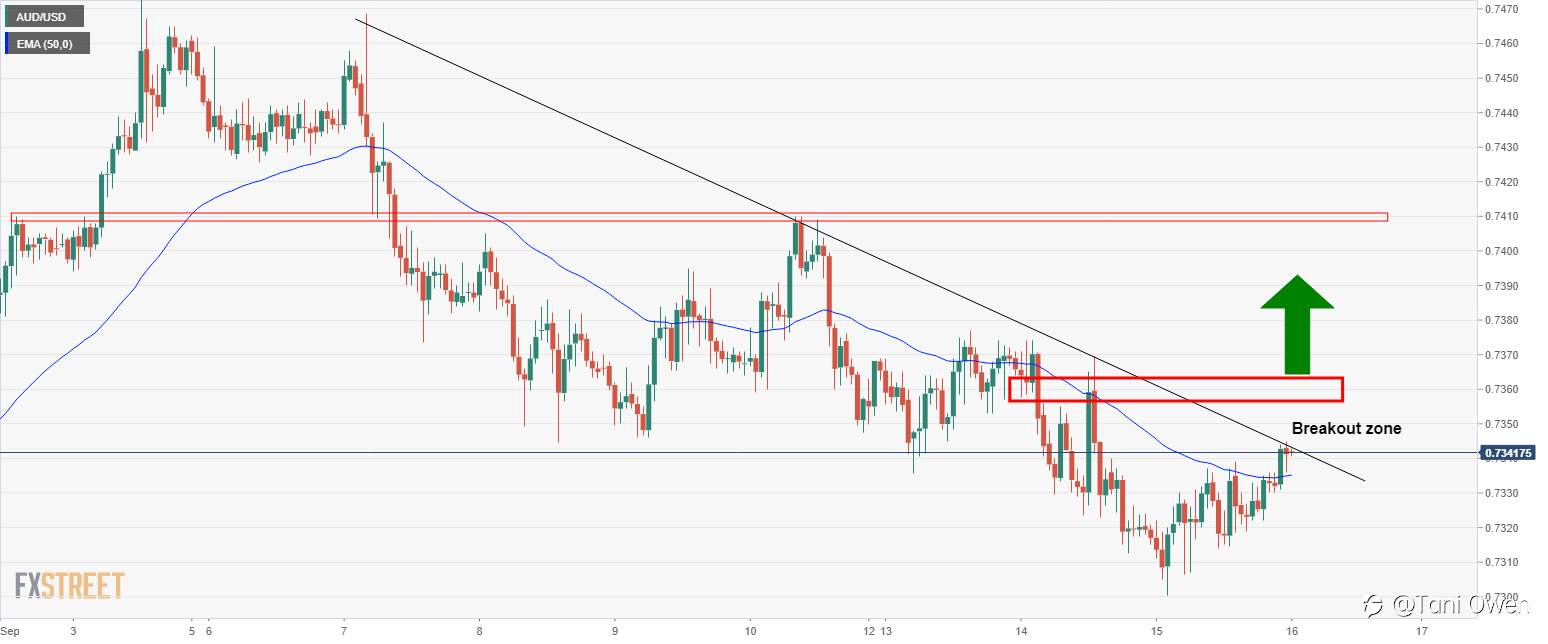
AUD/USD is chipping away at the trendline resistance, reacting positively to the Unemployment Rate, but the moves are incremental and barely noted on the hourly time frame.
Traders are taking note that current lockdowns have weighed on the participation rate, meaning the Unemployment Rate is misleadingly low.
AUD/USD is trading at 0.7336 and between 0.7328 and 0.7346 the high on the day so far.
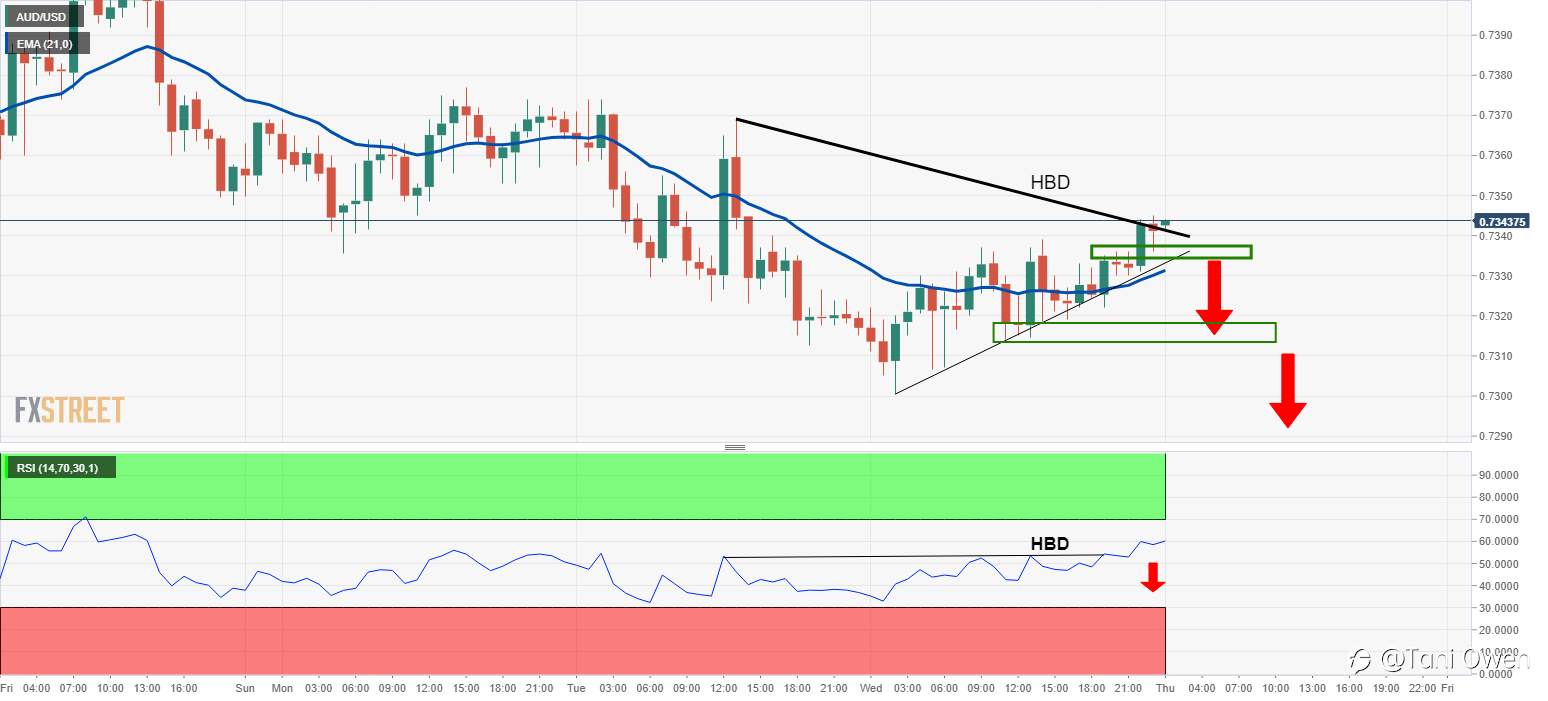
Prior to the data release, the following was explained: AUD/USD Price Analysis: Hidden bearish divergence into the Employment data
The two following scenarios were as follows:
Both of these scenarios remain in play for the day ahead with little bias from the data one way or the other.
Meanwhile, the focus was on the size of the hit to jobs from the combined Sydney and Melbourne lockdowns, analysts at Westpac explained.
The analysts argued that the current lockdowns have weighed on the participation rate, meaning the Unemployment Rate is misleadingly low – just 4.6% in July.
The analysts were looking for it to rise to 5.0% in August, in line with the median forecast.
About the Unemployment Rate
The Unemployment Rate released by the Australian Bureau of Statistics is the number of unemployed workers divided by the total civilian labour force.
If the rate hikes indicate a lack of expansion within the Australian labour market. As a result, a rise leads to weaken the Australian economy.
A decrease of the figure is seen as positive (or bullish) for the AUD, while an increase is seen as negative (or bearish).
Tuyên bố miễn trừ trách nhiệm: Quan điểm được trình bày hoàn toàn là của tác giả và không đại diện cho quan điểm chính thức của Followme. Followme không chịu trách nhiệm về tính chính xác, đầy đủ hoặc độ tin cậy của thông tin được cung cấp và không chịu trách nhiệm cho bất kỳ hành động nào được thực hiện dựa trên nội dung, trừ khi được nêu rõ bằng văn bản.
Bạn thích bài viết này? Hãy thể hiện sự cảm kích của bạn bằng cách gửi tiền boa cho tác giả.

Để lại tin nhắn của bạn ngay bây giờ