

· Views 725
Multiple factors undoubtedly influence the current global economic landscape and face new risks. From the situation in the past few years, there are several factors as follows:

1. The impact of global inflation
Since 2021, global inflation has been greatly affected by rising commodity prices and energy prices. The transmission mechanism is: that energy prices rise, and supply chains are cut off, leading to inflation, leading to a fall in output. Insufficient energy supply leads to insufficient production capacity of enterprises, which in turn leads to a decrease in the investment willingness of multinational companies and changes in the global layout of multinational companies.
2. Geopolitical events
Political tensions, conflicts, and geopolitical events in different regions may disrupt global economic stability and investment flows. Since Russia implemented a "special military operation" against Ukraine in February 2022, the United States, Europe, and other countries have imposed financial sanctions on Russia, causing major turbulence in the Russian financial market. Western capital has left. At the same time, it caused severe price fluctuations in international financial markets and commodity markets. The Ukraine crisis is not over yet, and the Palestinian-Israeli conflict has erupted again, further exacerbating the fragmentation of global financial markets and international investment. This trend is reflected in the areas of trade and investment, manifested in the regionalization and shortening of global supply chains.
3. The impact of the epidemic on the global supply chain
Since the outbreak of the epidemic in early 2020, global investment and trade have been severely affected, leading to supply chain disruptions. Changes in production and trade caused by the epidemic have caused difficulties in the circulation of goods and hindered international trade and cross-border investment.
4. Macroeconomic policies
Monetary and fiscal policies implemented by governments, such as interest rates, inflation targets, and government spending, can shape the overall economic environment. For example, some countries may devalue their currencies to improve export competitiveness, which may cause other countries to react, triggering global exchange rate fluctuations. In addition, changes in the monetary policies of major countries often affect global financial markets and commodity prices, having a significant impact on the global economy.
5. Environmental factors
Climate change, natural disasters, and sustainability issues are increasingly recognized as factors affecting economic stability and long-term growth prospects.
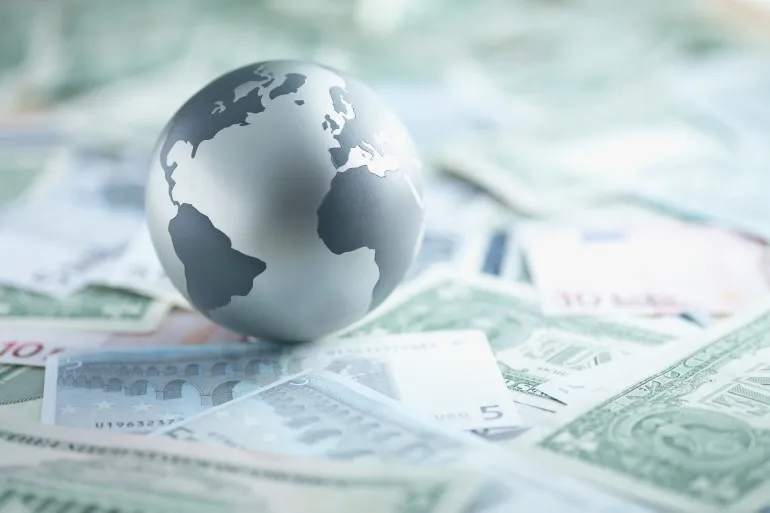
Overall, the inflation situation in most countries is expected to return to target levels by 2025. This indicates that while the future world economy still faces uncertainty, there are signs of recovery.
1. The impact of global inflation
Since 2021, global inflation has been greatly affected by rising commodity prices and energy prices. The transmission mechanism is: that energy prices rise, and supply chains are cut off, leading to inflation, leading to a fall in output. Insufficient energy supply leads to insufficient production capacity of enterprises, which in turn leads to a decrease in the investment willingness of multinational companies and changes in the global layout of multinational companies.
2. Geopolitical events
Political tensions, conflicts, and geopolitical events in different regions may disrupt global economic stability and investment flows. Since Russia implemented a "special military operation" against Ukraine in February 2022, the United States, Europe, and other countries have imposed financial sanctions on Russia, causing major turbulence in the Russian financial market. Western capital has left. At the same time, it caused severe price fluctuations in international financial markets and commodity markets. The Ukraine crisis is not over yet, and the Palestinian-Israeli conflict has erupted again, further exacerbating the fragmentation of global financial markets and international investment. This trend is reflected in the areas of trade and investment, manifested in the regionalization and shortening of global supply chains.
3. The impact of the epidemic on the global supply chain
Since the outbreak of the epidemic in early 2020, global investment and trade have been severely affected, leading to supply chain disruptions. Changes in production and trade caused by the epidemic have caused difficulties in the circulation of goods and hindered international trade and cross-border investment.
4. Macroeconomic policies
Monetary and fiscal policies implemented by governments, such as interest rates, inflation targets, and government spending, can shape the overall economic environment. For example, some countries may devalue their currencies to improve export competitiveness, which may cause other countries to react, triggering global exchange rate fluctuations. In addition, changes in the monetary policies of major countries often affect global financial markets and commodity prices, having a significant impact on the global economy.
5. Environmental factors
Climate change, natural disasters, and sustainability issues are increasingly recognized as factors affecting economic stability and long-term growth prospects.
Overall, the inflation situation in most countries is expected to return to target levels by 2025. This indicates that while the future world economy still faces uncertainty, there are signs of recovery.
Tuyên bố miễn trừ trách nhiệm: Quan điểm được trình bày hoàn toàn là của tác giả và không đại diện cho quan điểm chính thức của Followme. Followme không chịu trách nhiệm về tính chính xác, đầy đủ hoặc độ tin cậy của thông tin được cung cấp và không chịu trách nhiệm cho bất kỳ hành động nào được thực hiện dựa trên nội dung, trừ khi được nêu rõ bằng văn bản.
Bạn thích bài viết này? Hãy thể hiện sự cảm kích của bạn bằng cách gửi tiền boa cho tác giả.

Để lại tin nhắn của bạn ngay bây giờ