



An Essential Risk Awareness Guide for Traders and Copy Traders
The global trading industry continues to expand, but alongside this growth, a quieter and more dangerous threat has been gaining ground: clone broker scams.
Unlike obvious frauds, clone brokers do not rely on poorly designed websites or crude social media outreach. They closely imitate legitimate, regulated brokers by copying brand identities, license references, regulatory language, and even support structures. To many traders, especially those newer to the market, these platforms appear credible. That resemblance is precisely what makes them effective.
For modern traders and copy traders, market risk is no longer the only concern. Operational trust has become equally critical.
Why Clone Broker Scams Are Increasing
Several structural changes in the trading ecosystem have created favorable conditions for clone broker operations.
Digital onboarding has become faster and more convenient than ever. Accounts can be opened within minutes, deposits are processed instantly, and verification often feels like a routine step rather than a meaningful safeguard. While this improves accessibility, it also lowers the barrier for fraudulent actors.
At the same time, the rise of social trading and copy trading has shifted how trust is formed. Many users rely on visible performance metrics, online endorsements, or community activity rather than verifying the broker infrastructure beneath the surface.
Compounding the issue, regulatory information is publicly available but easily misused. Clone brokers frequently reference real license numbers or regulated firms without matching the correct legal entity, jurisdiction, or domain, assuming most users will not perform a full cross check.
How Clone Brokers Typically Operate
Most clone broker schemes follow a repeatable pattern.
The front end experience appears professional and familiar. Websites resemble those of legitimate brokers, regulatory disclosures look convincing, and early stage support is responsive. Deposits and initial trading activity often proceed without friction.
Problems typically emerge later. Withdrawal requests may face unexplained delays, additional conditions, or sudden compliance reviews. Some platforms introduce processing fees or demand extra deposits before releasing funds. Others restrict accounts during volatile periods or disappear entirely once sufficient capital has been collected.
These operations do not need to deceive every user to remain profitable. Even partial success sustains the model.
Why Copy Traders Face Elevated Risk
Copy trading introduces additional layers of exposure.
Even when a signal provider is trading responsibly, final execution depends on the broker’s infrastructure. When that broker is a clone, users may experience inconsistent fills, artificial slippage, delayed trade replication, or sudden account restrictions.
In many cases, traders attribute these issues to the strategy itself, unaware that the underlying problem stems from the execution environment rather than the signal provider.
This makes broker verification especially important for anyone participating in copy trading.
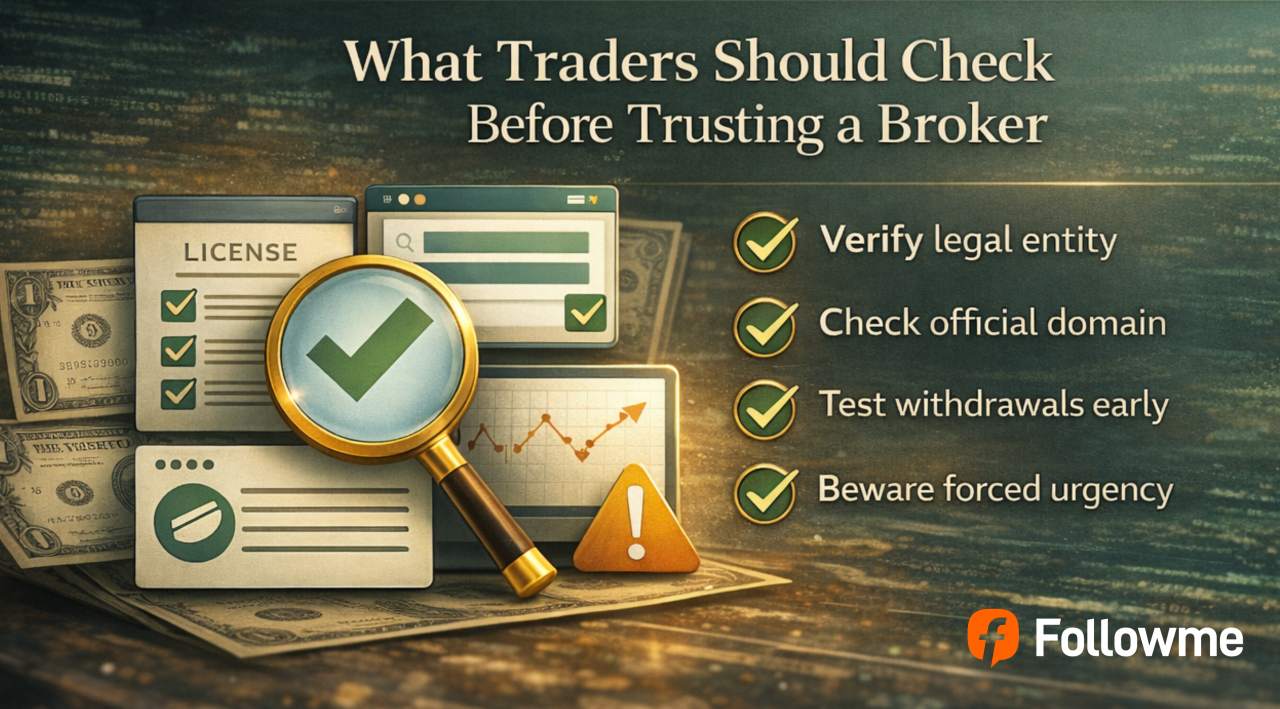
What Traders Should Check Before Trusting a Broker
Avoiding clone brokers requires process, not insider knowledge.
Begin with regulatory verification. Confirm the exact legal entity name on the regulator’s official register, not just the brand name displayed on the platform. Small discrepancies often indicate a clone.
Verify domain legitimacy. Regulators license entities, not URLs. If the trading domain is not clearly associated with the licensed entity, caution is warranted.
Test the full trading cycle. Deposits are rarely an issue. Withdrawals reveal how a platform truly operates. A small early withdrawal test can provide valuable insight.
Understand execution behavior. Some slippage during fast markets is normal. Persistent irregularities or asymmetric execution are not.
Finally, remain cautious of artificial urgency. Pressure to deposit quickly, upgrade accounts, or act before a deadline is a common tactic used by clone operations. Legitimate platforms do not rely on forced urgency.
Trust Is Infrastructure, Not Marketing
As the trading ecosystem matures, trust is increasingly defined by infrastructure rather than promotion.
Transparency around broker connections, execution quality, performance measurement, and withdrawal reliability matters more than surface level branding. Platforms that prioritize education, verification, and user protection are building long term confidence, not slowing user participation.
Clone broker scams will continue to evolve. Interfaces will improve, and messaging will become more refined. But the underlying vulnerability remains unchanged: reliance on users failing to examine what sits beneath the interface.
In today’s markets, protecting capital begins before the first trade is placed. It starts with informed decisions, verification, and realistic expectations.
Tuyên bố miễn trừ trách nhiệm: Quan điểm được trình bày hoàn toàn là của tác giả và không đại diện cho quan điểm chính thức của Followme. Followme không chịu trách nhiệm về tính chính xác, đầy đủ hoặc độ tin cậy của thông tin được cung cấp và không chịu trách nhiệm cho bất kỳ hành động nào được thực hiện dựa trên nội dung, trừ khi được nêu rõ bằng văn bản.

-KẾT THÚC-