

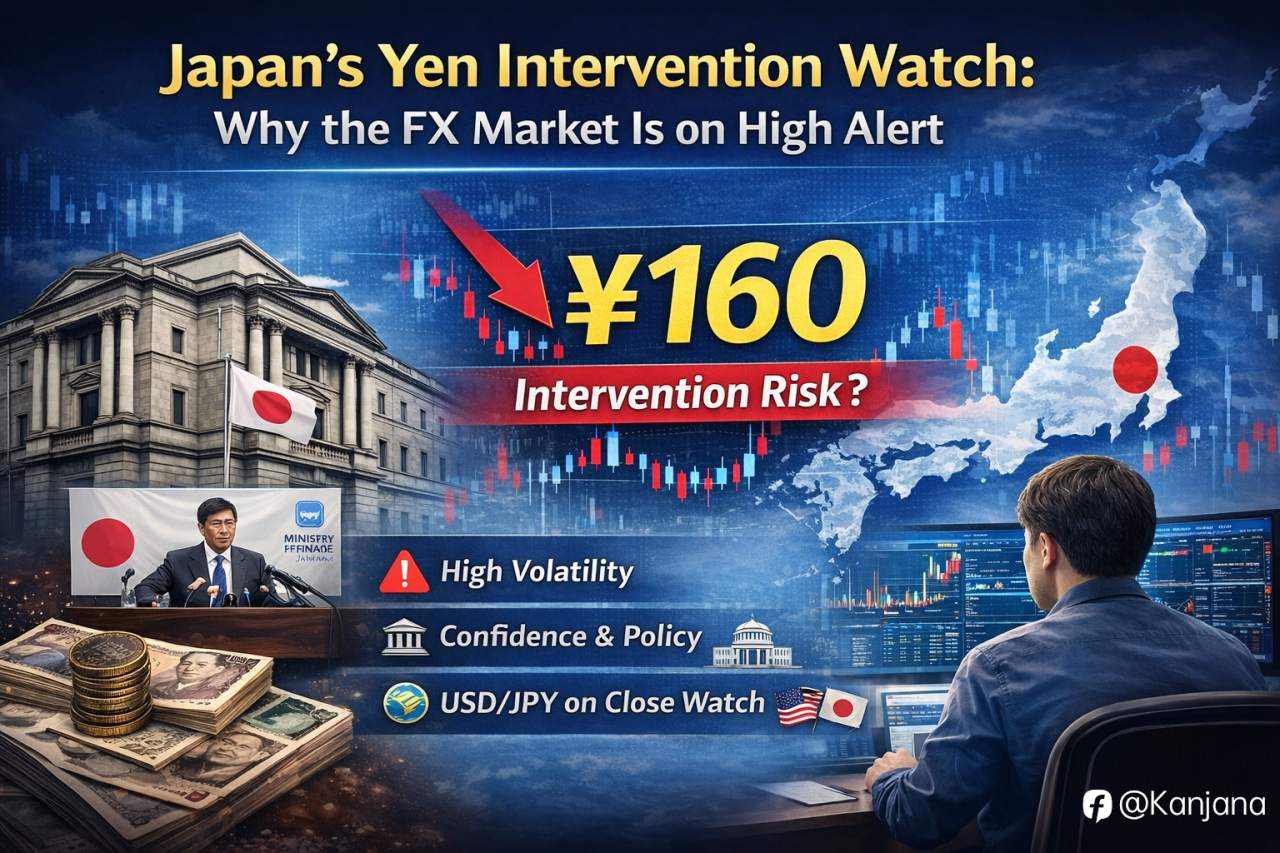
Global FX markets are closely monitoring Japan’s stance on the Japanese yen (JPY) as the currency trades near historically weak levels against the U.S. dollar. The possibility of official intervention has re entered market discussions, creating a high volatility environment particularly for USDJPY traders.
This is not just a technical story. It is a confidence and policy driven narrative, where headlines can move price faster than economic data.
Why Japan Is Concerned About Yen Weakness
The yen’s prolonged depreciation has raised alarms among Japanese policymakers. While a weaker currency can support exports, excessive and rapid yen weakness creates broader economic risks:
- Rising import costs, especially energy and food
- Increased inflation pressure on households
- Reduced confidence in currency stability
Japanese officials, including the Ministry of Finance Japan, have repeatedly signaled discomfort with one sided FX moves. The message has been consistent: disorderly movements will not be ignored.
Although Japan maintains a free floating currency regime, history shows that when volatility becomes extreme, authorities are willing to act often decisively.
The Role of Interest Rate Differentials
At the core of the yen’s weakness is the widening policy gap between Japan and the U.S.:
- The Bank of Japan has kept monetary policy accommodative for years
- U.S. interest rates remain significantly higher, supporting USD demand
This yield differential encourages carry trades, putting persistent pressure on JPY. However, intervention risk increases when price action becomes too fast or speculative, regardless of fundamentals.
How FX Markets Typically React to Intervention Risk
When intervention becomes a credible threat, USDJPY often shows the following behavior:
- Sudden, sharp reversals without warning
- Long upper or lower wicks on intraday candles
- Aggressive stop loss sweeps on both sides
- Reduced reliability of short term technical setups
Importantly, actual intervention does not need to occur. Sometimes, verbal warnings alone are enough to change positioning and sentiment.
Trading Implications: Discipline Over Prediction
In an environment like this, forecasting exact price direction is less important than managing risk intelligently.
Key principles for traders:
- Avoid over leveraging USDJPY
- Trade only clear break and retest or zone based setups
- Expect false breakouts and rapid reversals
- Reduce position size during high headline risk
- Be comfortable staying flat when structure is unclear
This is not a market for emotional or impulsive trading. Patience is a strategic advantage.
Bigger Picture: What This Means for Global FX
Japan’s yen situation reflects a broader theme in global markets:
FX is increasingly driven by confidence, policy signaling, and geopolitics not just data.
As long as risk sentiment remains fragile and policy divergence persists, headline driven volatility will continue to dominate, especially in major pairs involving JPY and USD.
Japan’s readiness to step in against excessive yen weakness has placed USDJPY under intense scrutiny. Whether intervention occurs or not, the risk of sudden volatility is real and elevated.
For traders, the optimal approach is clear:
Trade selectively, respect risk, avoid chasing price, and stay alert to policy headlines.
In this market, capital preservation matters more than prediction.
Disclaimer: This article is for informational and educational purposes only and does not constitute financial or investment advice. Trading foreign exchange involves significant risk. Always assess your own risk tolerance and trade responsibly.
Đã chỉnh sửa 21 Jan 2026, 16:37
Tuyên bố miễn trừ trách nhiệm: Quan điểm được trình bày hoàn toàn là của tác giả và không đại diện cho quan điểm chính thức của Followme. Followme không chịu trách nhiệm về tính chính xác, đầy đủ hoặc độ tin cậy của thông tin được cung cấp và không chịu trách nhiệm cho bất kỳ hành động nào được thực hiện dựa trên nội dung, trừ khi được nêu rõ bằng văn bản.


Để lại tin nhắn của bạn ngay bây giờ