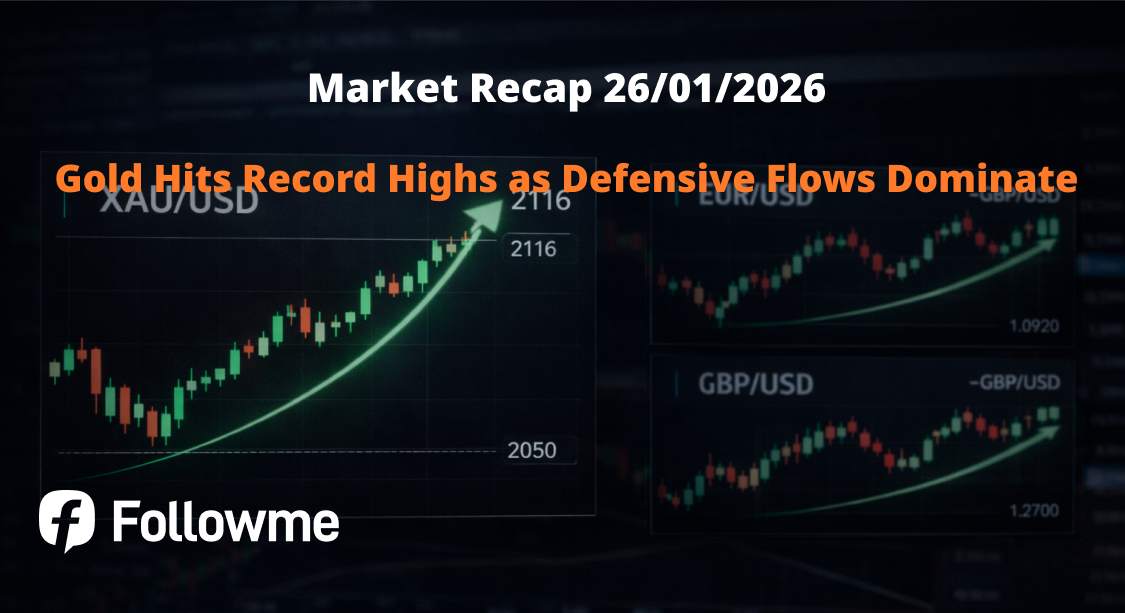
1) Why is gold reaching record highs?
Today’s surge in gold prices is supported by three key drivers:
First, rising safe-haven demand.
Markets remain highly headline-sensitive. Ongoing geopolitical tensions and concerns around monetary policy have pushed investors toward safe assets, with gold remaining a top destination.
Second, short-term erosion of confidence in fiat currencies.
As policy risks increase and interest-rate expectations become less predictable, gold benefits from its role as a store of value independent of any single monetary system.
Third, continued long-term inflows.
Gold purchases by central banks and long-term investors remain steady, providing a solid foundation for the medium- to long-term bullish trend, even as short-term pullbacks may occur.
2) Spillover effects across other markets
Gold’s record high is not an isolated story—it reflects broader market conditions:
-
USD trades in a choppy range, facing pressure as safe-haven demand shifts toward gold.
-
FX volatility has increased, particularly across USD-related currency pairs.
-
Risk assets (equities and risk-sensitive currencies) remain cautious, lacking clear breakout momentum.
In this environment, gold continues to serve as a barometer of market sentiment, signaling that overall risk aversion remains elevated.
3) Trader’s perspective: follow the trend, but respect the risk
While gold’s primary trend remains bullish, traders must clearly distinguish between trend direction and entry timing.
At record-high levels, volatility typically expands, increasing the likelihood of sharp pullbacks or short-term profit-taking. Chasing price at these levels carries significant risk without a well-defined risk management plan.
Preferred strategies:
-
Trade based on clear scenarios, prioritizing buy-on-dips toward key support zones rather than chasing breakouts.
-
Reduce position size, allow for wider stops when appropriate, or wait patiently for clear structural confirmation.
-
For medium- to long-term investors, gold’s bullish outlook remains intact as long as macro risks are not meaningfully resolved.
4) What to watch going forward?
In the coming sessions, gold’s price action will remain highly sensitive to:
-
Developments in monetary policy and interest-rate expectations;
-
Changes in geopolitical risk intensity;
-
Movements in the USD and bond yields.
Any shift in these factors could trigger significant volatility in the gold market.
Conclusion
26/01/2026 marks a session in which gold set a new all-time high, underscoring the defensive posture dominating global financial markets. In the short term, gold remains a focal point for capital flows, but elevated volatility requires traders to exercise greater discipline and stricter risk management.
Key message for traders:
Follow the trend, trade with a plan, and avoid emotion-driven decisions when markets are trading at sensitive price levels.




-KẾT THÚC-