


· Views 20,313
Executive Summary
🔸Oil prices surged above US$110 as Middle East conflict disrupted supplies.
🔸Asian markets plunged, with South Korea and Japan hit hardest.
🔸Governments imposed fuel caps and rationing to contain panic buying.
(March 9) U.S. oil prices surged above US$110 per barrel on March 9, 2026, the highest in nearly four years, as the war in Iran intensified and disrupted global energy supplies.
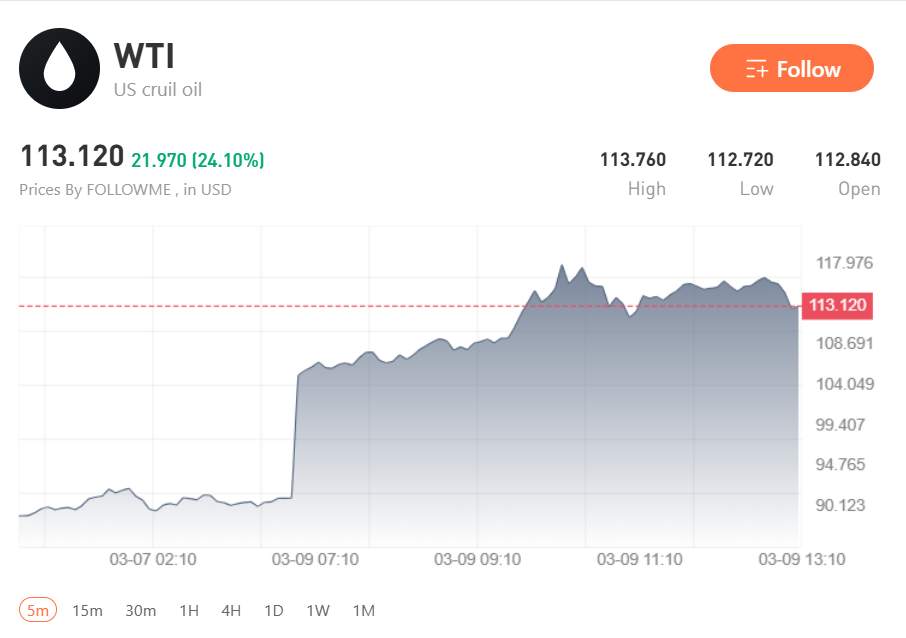
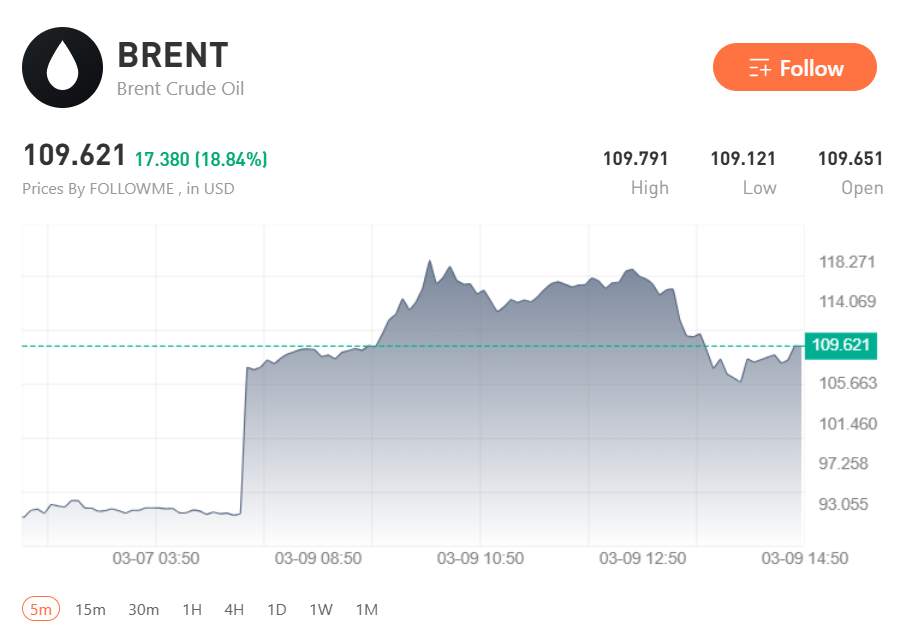
WTI crude futures spiked nearly 30% to US$119, while Brent crude climbed above US$118 after Israeli strikes hit oil storage facilities in Tehran. Iraq, Kuwait, and Qatar slashed production, fueling fears of prolonged shortages.
The shock sent Asian markets plunging: South Korea’s Kospi fell over 8%, Japan’s Nikkei dropped 7%, and Hong Kong’s Hang Seng lost 3%. Governments rushed to respond, with Seoul imposing a rare fuel price cap and announcing a US$66.9 billion stabilization program, while Bangladesh and Pakistan introduced rationing amid panic buying.
The conflict escalated after Mojtaba Khamenei was named Iran’s new supreme leader, with Iran firing missiles at Israel for the first time. U.S. President Donald Trump dismissed the oil spike as temporary, calling it a “small price to pay” to eliminate Iran’s nuclear threat.
Analysts warn prices could climb further if the Strait of Hormuz remains closed, raising risks of a global recession and renewed inflationary pressures.
Tuyên bố miễn trừ trách nhiệm: Quan điểm được trình bày hoàn toàn là của tác giả và không đại diện cho quan điểm chính thức của Followme. Followme không chịu trách nhiệm về tính chính xác, đầy đủ hoặc độ tin cậy của thông tin được cung cấp và không chịu trách nhiệm cho bất kỳ hành động nào được thực hiện dựa trên nội dung, trừ khi được nêu rõ bằng văn bản.
Bạn thích bài viết này? Hãy thể hiện sự cảm kích của bạn bằng cách gửi tiền boa cho tác giả.

-KẾT THÚC-