



Global FX markets continue to trade in a high-volatility environment, where geopolitical tensions and energy dynamics remain the primary drivers. While Middle East tensions have shown signs of temporary easing, market conditions remain unstable. The most notable development is a clear divergence in asset behavior: while the U.S. dollar continues to act as the dominant safe haven, gold and silver have declined sharply, signaling a structural shift in global capital flows.
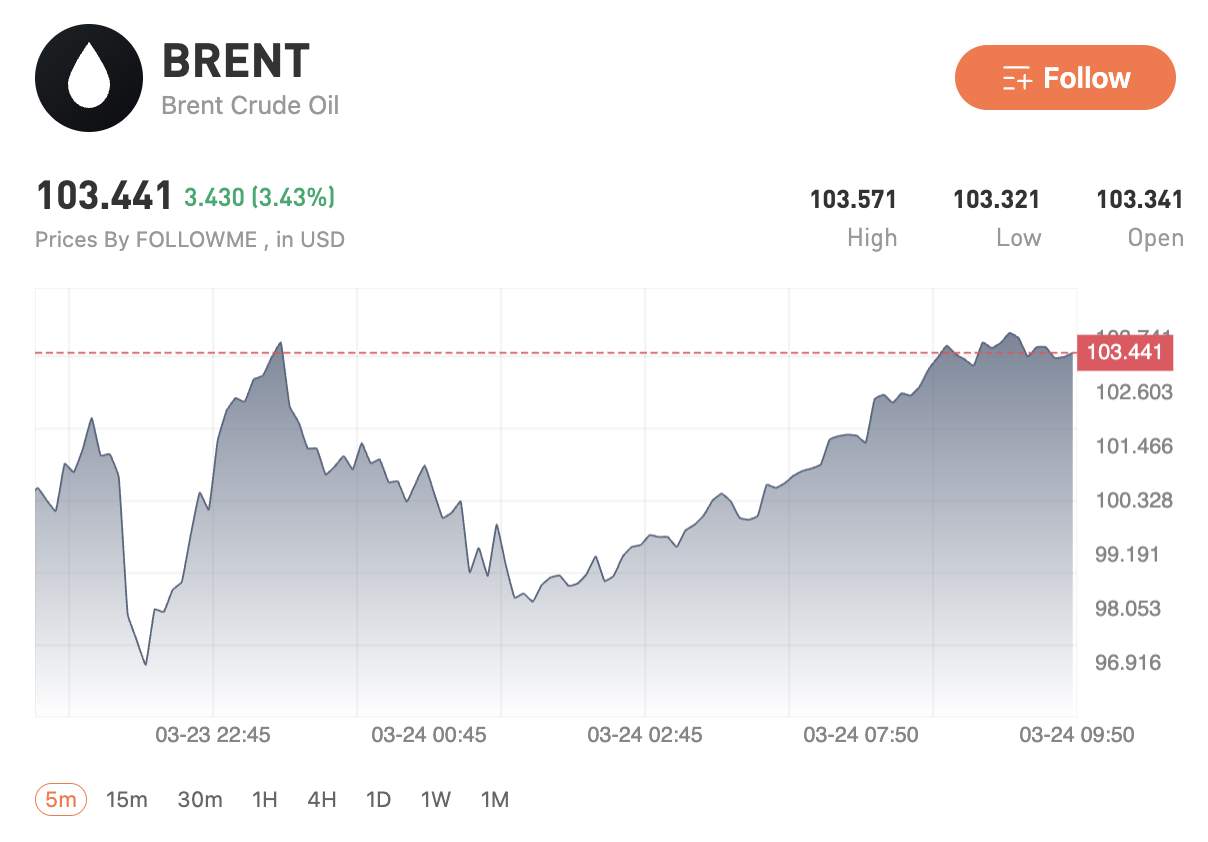
Oil prices, after a sharp rally, are currently stabilizing around $100–104 per barrel (Brent), still elevated compared to recent historical levels. Earlier moves above $110 highlight the market’s sensitivity to supply risks.
At this stage, oil is no longer just a commodity and it is a macro driver. Rising oil prices directly influence inflation expectations, which in turn affect monetary policy outlooks and currency movements. Conversely, when oil stabilizes or declines, risk sentiment improves, impacting capital flows across asset classes.
In the current environment, oil effectively acts as a sentiment switch for global markets.
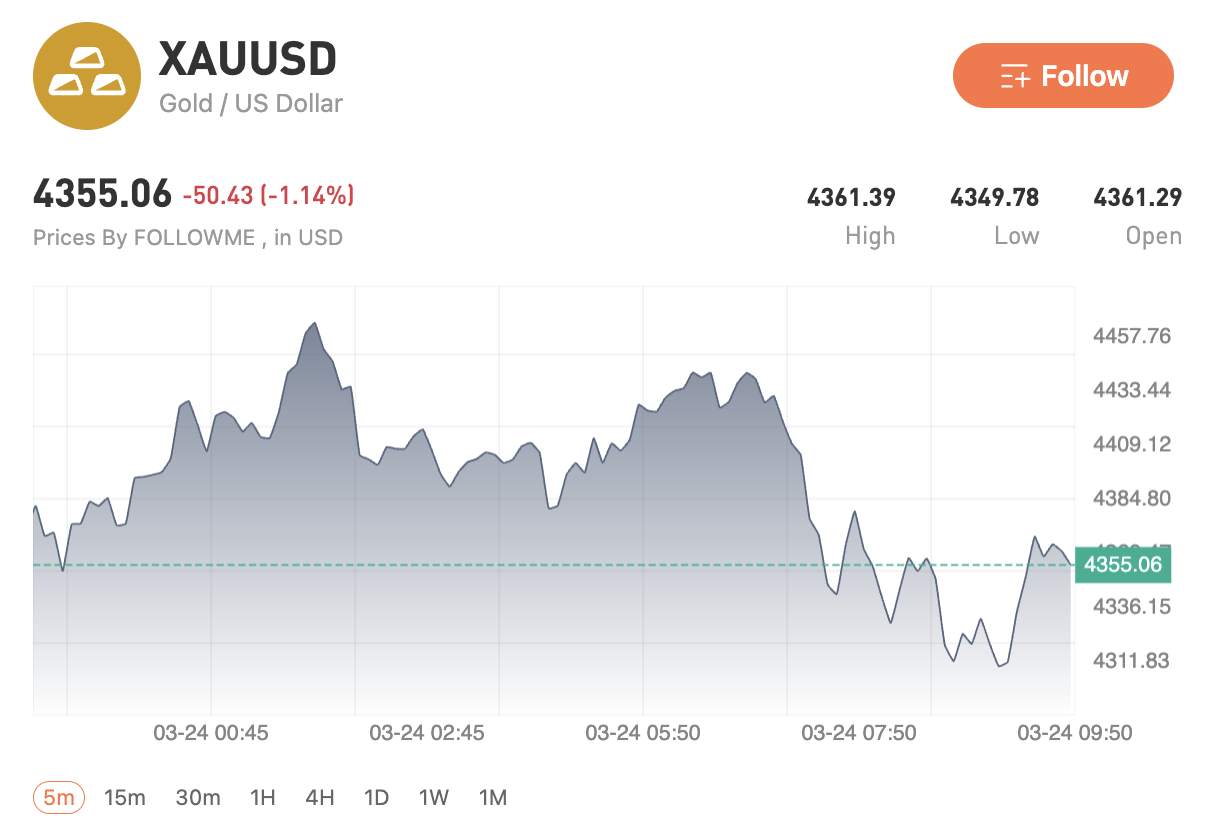
As of March 24, gold prices have declined to around $4,35x per ounce, marking a significant pullback from previous highs near $5,5xx. In recent sessions, gold even tested lower levels, reflecting sustained selling pressure.
What stands out is that this decline is occurring despite ongoing geopolitical risks, indicating that gold is no longer reacting in line with traditional “risk-off” behavior.
Silver declines more sharply
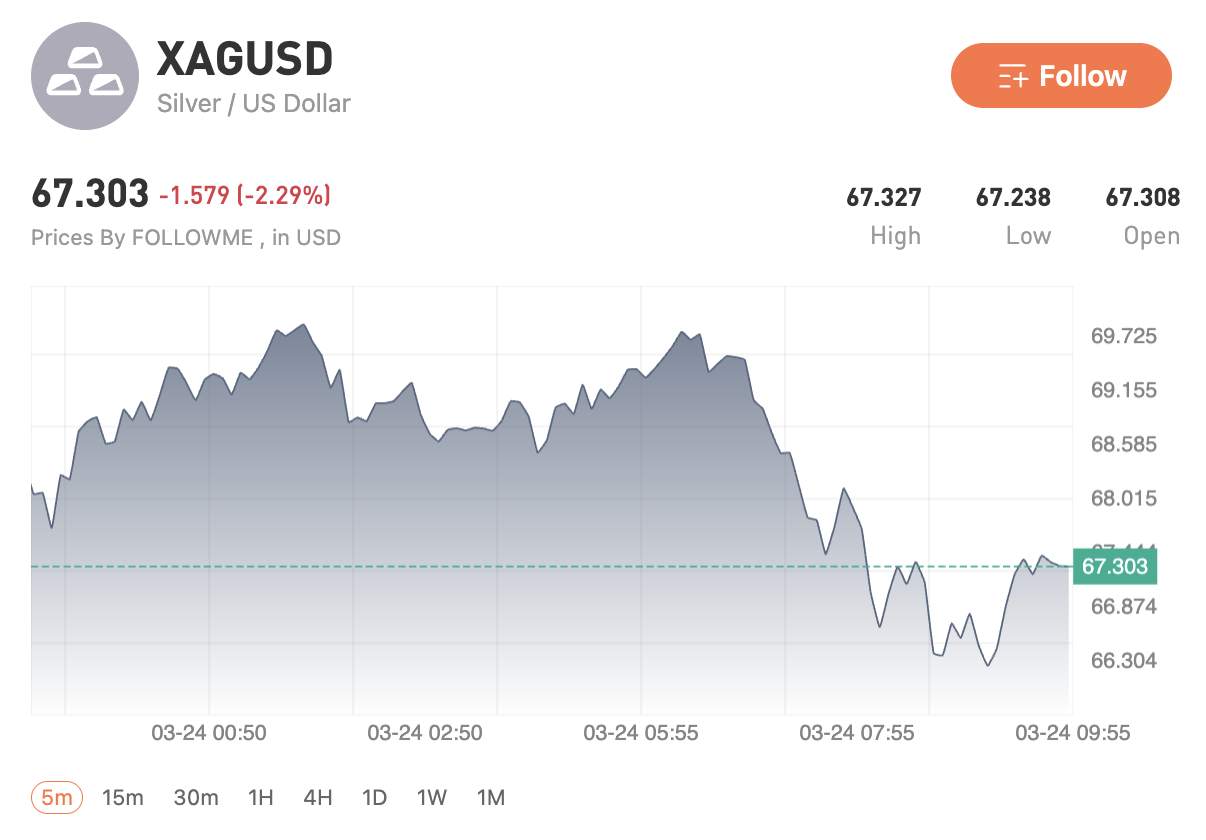
Silver has come under even heavier pressure than gold. As both a financial asset and an industrial metal, silver is more sensitive to economic expectations. As concerns about global growth increase, industrial demand expectations weaken, leading to sharper declines in silver prices compared to gold. This dual exposure makes silver particularly vulnerable in the current macro environment.
Why are gold and silver falling?
First, the strength of the U.S. dollar is the dominant factor. As USD appreciates, gold and silver become more expensive for global investors, reducing demand. In addition, USD offers both safety and yield, making it more attractive relative to non-yielding assets.
Second, the higher-for-longer interest rate environment continues to weigh on precious metals. As interest rates remain elevated, the opportunity cost of holding gold and silver increases, encouraging capital to move toward yield-bearing assets.
Third, rising oil prices are reinforcing inflation concerns. While inflation typically supports gold, in this case it leads markets to expect tighter monetary policy for longer, indirectly strengthening USD and pressuring metals.
Finally, the most important structural shift is in safe-haven flows. Capital is increasingly favoring USD over gold, prioritizing liquidity and yield over traditional hedging assets.
USD and major currencies move with oil
The U.S. dollar remains at the center of the Forex market, but its strength is highly sensitive to energy prices and geopolitical developments. When risks escalate, USD strengthens rapidly. When tensions ease, it tends to correct, allowing other currencies to recover.
EUR and GBP have shown signs of rebound as USD weakens, although these moves remain largely technical. Meanwhile, JPY remains highly sensitive, particularly near levels that could trigger policy responses from Japanese authorities.
Commodity-linked currencies such as AUD and NZD continue to experience heightened volatility, reflecting both shifts in risk sentiment and global growth expectations.
Trader Perspective
The current market is no longer trend-driven, but rather dominated by headlines and energy dynamics. Price action can reverse quickly in response to new developments, especially those related to the Middle East or oil supply.
Traditional signals are becoming less reliable. Gold is no longer a consistent safe-haven indicator, while USD and oil have become the primary variables to monitor.
In this environment, trading based on key levels, confirmation signals, and strict risk management is more effective than attempting to predict long-term trends.
Conclusion
Today’s market highlights a clear shift in capital flow dynamics. Oil remains the key driver, gold has declined toward $4,36xx per ounce, silver has fallen even more sharply, and USD continues to dominate as the primary safe haven.
The key takeaway: Markets are no longer centered around gold; they are now driven by USD and oil.
Want to stay ahead of major macro developments that move the Forex market?
👉Follow Followme and check out the Weekly Economic Calendar




Tuyên bố miễn trừ trách nhiệm: Quan điểm được trình bày hoàn toàn là của tác giả và không đại diện cho quan điểm chính thức của Followme. Followme không chịu trách nhiệm về tính chính xác, đầy đủ hoặc độ tin cậy của thông tin được cung cấp và không chịu trách nhiệm cho bất kỳ hành động nào được thực hiện dựa trên nội dung, trừ khi được nêu rõ bằng văn bản.

Để lại tin nhắn của bạn ngay bây giờ